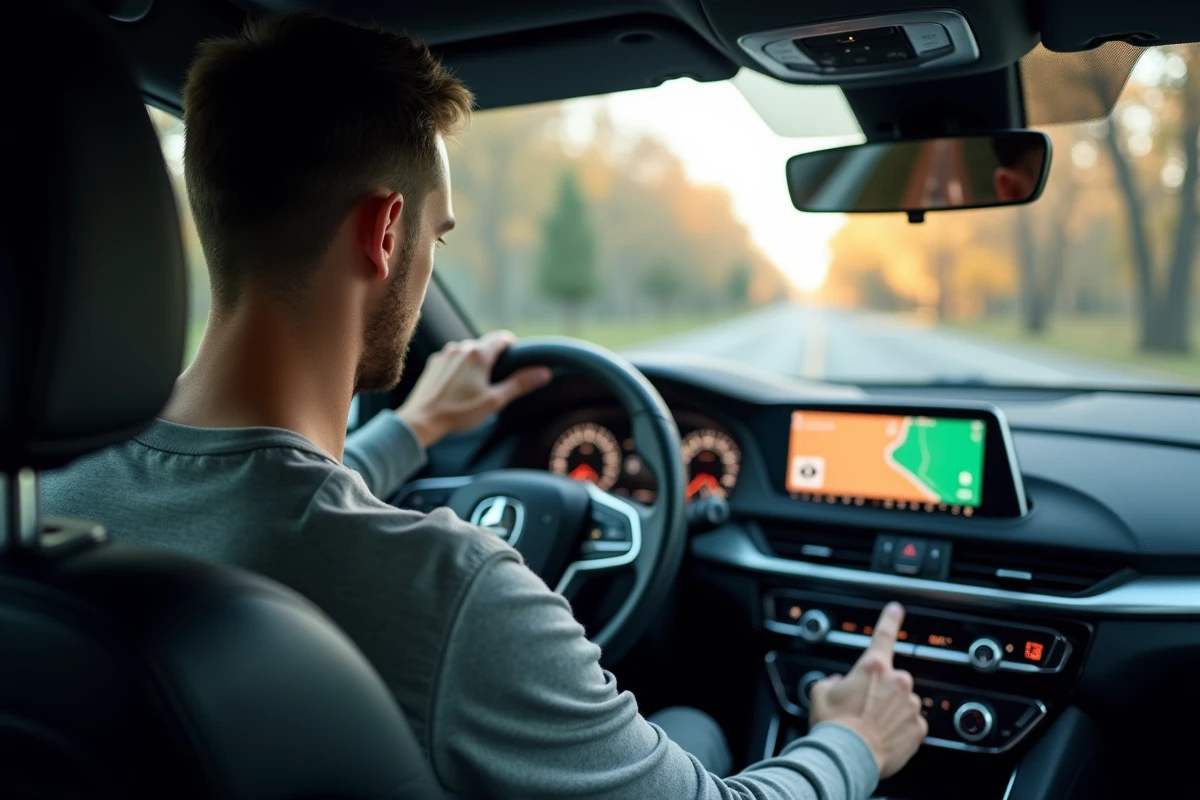
Displaying Waze on a vehicle’s dashboard depends on three variables: the multimedia system’s projection protocol, the smartphone’s operating system, and the type of connection (wired or wireless). Each combination produces different results in terms of latency, stability, and accessible features. Understanding these differences allows for choosing the most suitable method for one’s vehicle and daily use.
Waze Projection Protocols: Comparative Table of Methods
| Method | Compatible Systems | Connection | Native Waze | Main Limitation |
|---|---|---|---|---|
| Android Auto | Android 8.0+ | USB or wireless | Yes | Requires Waze to be installed on the phone |
| Apple CarPlay | iOS (iPhone) | USB or wireless | Yes (since iOS 12) | No post-parking navigation |
| MirrorLink | Android (certain models) | USB | Partial | Support abandoned by most manufacturers |
| AI Box | Vehicles with wired CarPlay | USB (box plugged in) | Yes (via embedded Android) | Risk of overheating during prolonged use |
The major difference lies between Android Auto and Apple CarPlay, both of which support Waze natively. MirrorLink, once offered by some manufacturers, has largely disappeared from recent dashboards. AI Box devices add an Android layer to a wired CarPlay system, but their reliability remains debated.
To display Waze on the car screen, the most direct method remains the connection via Android Auto or CarPlay, depending on the smartphone used.
USB or Wireless Connection: What Changes for Waze in the Car
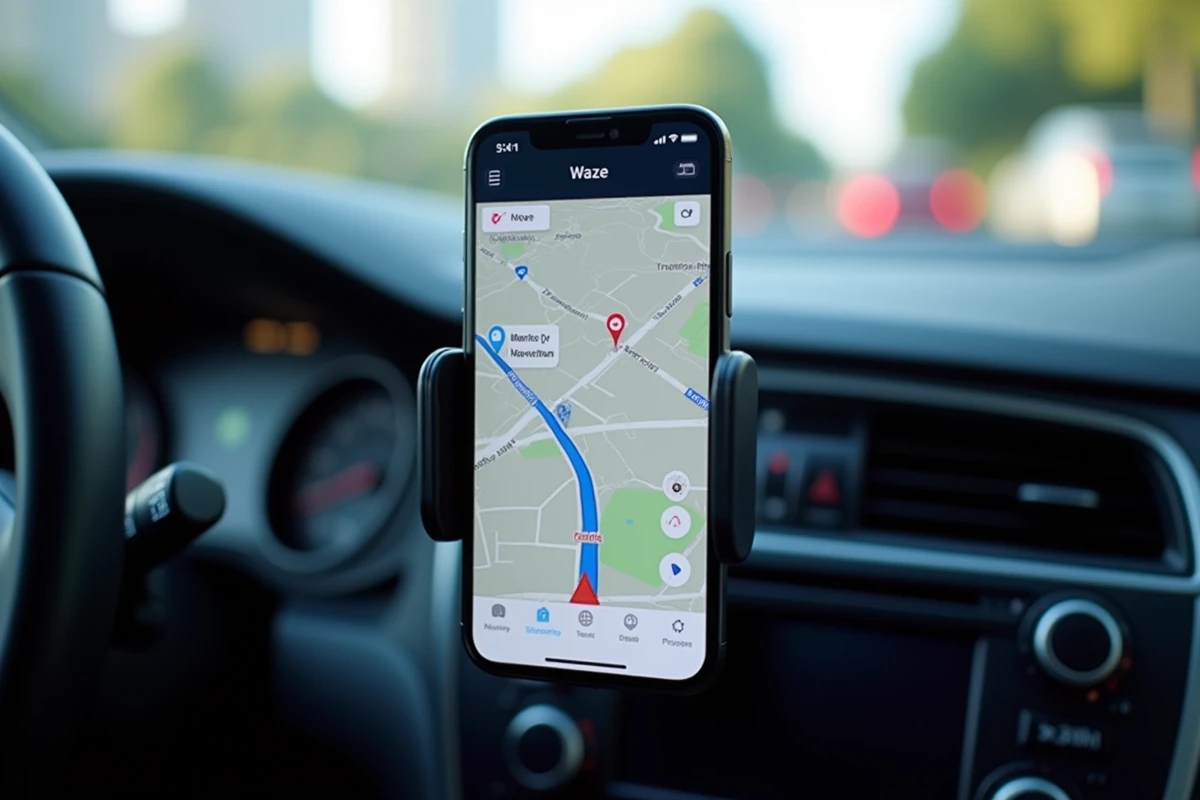
The choice between a USB cable and a wireless connection (Bluetooth + Wi-Fi) affects not only comfort but also the stability of the display and the smartphone’s data consumption.
With a wired connection, the phone is powered, and the video transmission goes through the cable. Latency is nearly zero, and the connection does not drop in areas with weak network coverage. Waze continues to function as long as the phone’s GPS receives a satellite signal.
In wireless mode, the smartphone simultaneously uses Bluetooth (for pairing), Wi-Fi (for video streaming), and mobile data (for real-time Waze alerts). This triple demand speeds up battery drain and can cause disconnections in vehicles where the embedded Wi-Fi module lacks power.
- The USB cable ensures constant power and stable projection, even on long highway trips
- Wireless mode frees up the USB port but requires a recent smartphone with a high-performance Wi-Fi chipset
- Some vehicles only support wired mode for Android Auto, while wireless CarPlay is more widespread
- AI Box devices convert a wired CarPlay into a complete Android system, but user feedback reports issues of overheating during prolonged use in summer
Waze via CarPlay and Android Auto: Functional Differences to Know
Waze works on both protocols, but the experience is not identical. On Android Auto, the app benefits from older integration and native access to voice commands via Google Assistant. The command “Ok Google, navigate to” directly launches a Waze route without touching the screen.
On CarPlay, Waze has been available since iOS 12. The app can be controlled via Siri, but voice commands remain more limited than on Android Auto. Siri can launch Waze and dictate an address, but does not offer the same level of control over community reports (speed cameras, hazards, traffic jams).
A functional gap deserves attention: Google Maps integrated into some systems like iDrive 9 offers navigation continuity after parking, a feature absent from Waze via CarPlay or Android Auto. For business fleets that make frequent stops, this difference weighs in the choice of navigation app.
Waze on Dashboard and Professional Drivers: Legal Framework and Safety
The permanent display of a navigation app on the central screen raises specific questions for professional drivers subject to tachograph obligations. The European Directive 2026/112 now regulates interactions with embedded screens for commercial vehicles and trucks.
The principle is simple: any manual interaction with a screen while driving is punishable. Waze reports (speed cameras, obstacles, police) require a touch on the screen, which can constitute an offense for a professional driver in an active driving situation.
For vehicles equipped with digital tachographs, using Waze does not pose a direct technical problem. The tachograph records driving and rest times independently of the multimedia system. However, in the event of an accident, the presence of an active navigation app on the screen could be examined as part of the investigation, especially if a manual report was made shortly before the incident.
- Voice commands (Google Assistant or Siri) allow controlling Waze without taking eyes off the road, which remains the recommended method for professionals
- Fleet managers sometimes prefer integrated Google Maps for its post-parking continuity and the absence of manual solicitation related to community reports
- Displaying Waze on the instrument cluster (dashboard behind the steering wheel), available on some vehicles compatible with Android Auto, reduces distraction compared to the central screen
Resolving Common Waze Display Issues
Waze does not appear on the vehicle screen in several scenarios. The most common: the app is not installed or not updated on the smartphone. Android Auto and CarPlay only project apps present on the phone, not those downloaded from any embedded store.
On some recent models (like the Renault Scenic E-Tech), users report that Waze does not appear in the list of Android Auto apps displayed on the screen. The solution usually involves updating the app, restarting the multimedia system, or reconnecting the USB cable.
Low-quality USB cables are another frequent source of malfunction. A cable that provides charging but not data transfer will prevent projection. Using the original smartphone cable or a certified USB-IF cable eliminates this problem in most cases.
The last point to check concerns the vehicle’s settings. Some multimedia systems disable third-party app projection by default. Explicitly activating Android Auto or CarPlay in the vehicle settings remains a prerequisite that many users forget after a system reset.