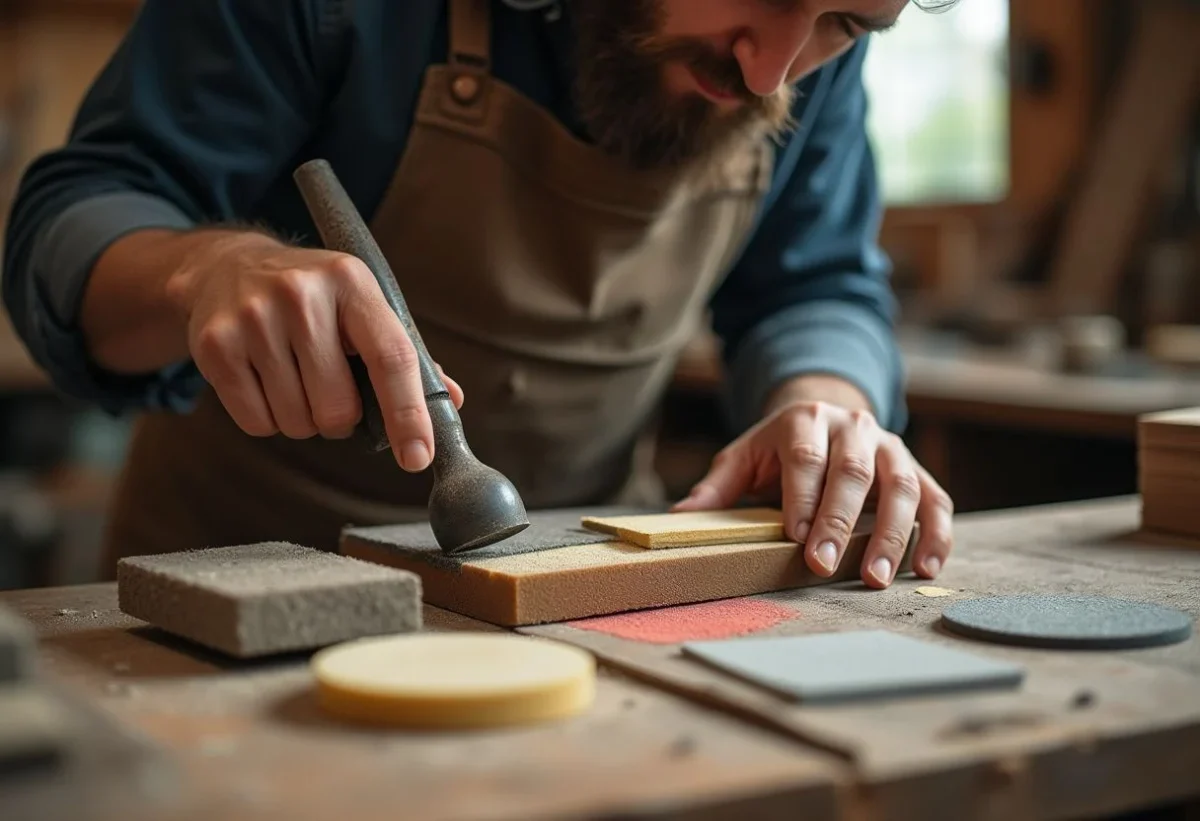
The abrasive occupies a central place in the world of sanding and finishing. Often unknown to the general public, it is the essential tool for artisans, industrialists, and seasoned DIYers. Used for cutting, polishing, or smoothing, it transforms and perfects surfaces with unparalleled precision. Far from being limited to sandpaper found in hardware stores, abrasives come in various forms, tailored to each material and use. Invisible yet omnipresent, it contributes to the quality of finished products, whether they are furniture, automotive bodies, or delicate jewelry.
The Centuries-Old Use of Abrasives
To understand the place of abrasives today, we must look back at their millennia-old history. Abrasives have evolved over time, from simple stone tools to high-tech materials.
- The Beginnings of Abrasion: since prehistoric times, humans have used stones to smooth, cut, and sculpt. Flint, for example, was used to shape rudimentary tools.
- Renaissance and Industrial Revolution: with the emergence of new techniques, abrasives diversified. The introduction of sandpaper in the 18th century marked a decisive turning point in their use.
- Innovations of the 20th Century: the creation of synthetic materials, such as silicon carbide and aluminum, has significantly improved the properties of modern abrasives.
The Different Types of Abrasives and Their Uses
Abrasives come in a multitude of variants, each corresponding to a specific use. Whether for metal, wood, or glass, there is an abrasive suited to every need.
Natural abrasives like sandstone and corundum are still used for certain tasks, but synthetic versions have largely taken over. Silicon carbide is particularly valued for grinding hard materials, while aluminum oxide is suitable for metals and wood. Diamond abrasives offer extreme precision and are indispensable in the stone and glass industry.
Technology and Innovation in the Field of Abrasives
The field of abrasives continues to progress thanks to technological advancements. Recent research highlights increasingly effective and environmentally friendly solutions.
- Sustainable Development: today, abrasive manufacturers are investing in more eco-friendly production processes. The use of organic binders and recycled materials is on the rise.
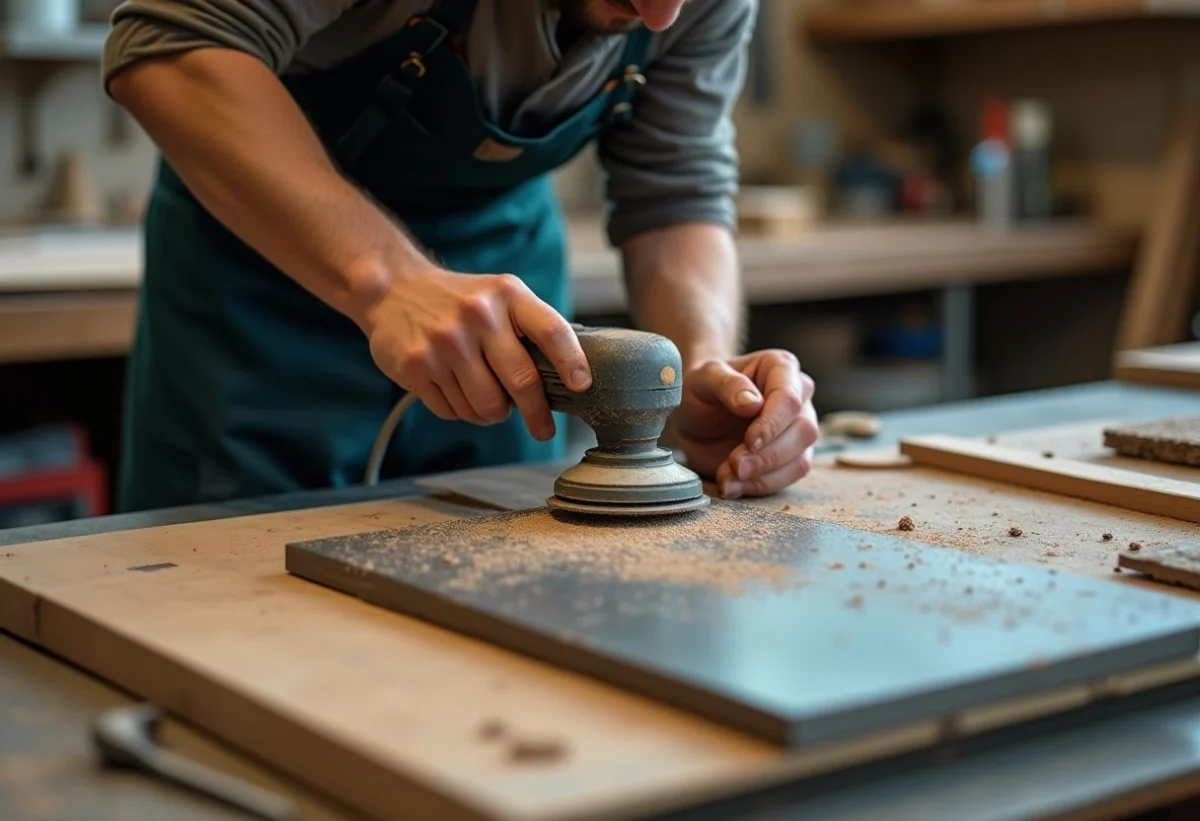
- Improved Performance: the new generations of abrasives are designed to offer increased longevity and superior performance. Innovations in structure and composition allow for reduced energy consumption during sanding.
- Digital Applications: some abrasives are now integrated into computer-controlled machines, offering unmatched work precision and reducing human errors.
Practical and Indispensable Applications of Abrasives
Beyond industrial manufacturing, abrasives play an essential role in many sectors, often in an invisible manner.
In the field of automotive, they are used for surface preparation before painting, ensuring a smooth and perfect finish. Cabinetmakers use them to give wood a silky and refined touch. In jewelry, abrasives allow for polishing precious stones and providing unparalleled brilliance to jewelry. Each field has its specific requirements, and the abrasive must adapt with precision and efficiency.
Through this exploration, it is clear that the abrasive remains an essential and versatile tool, capable of transforming raw material into a masterpiece. Indispensable in various sectors, it continues to reinvent itself to meet the growing demands for performance and sustainability.