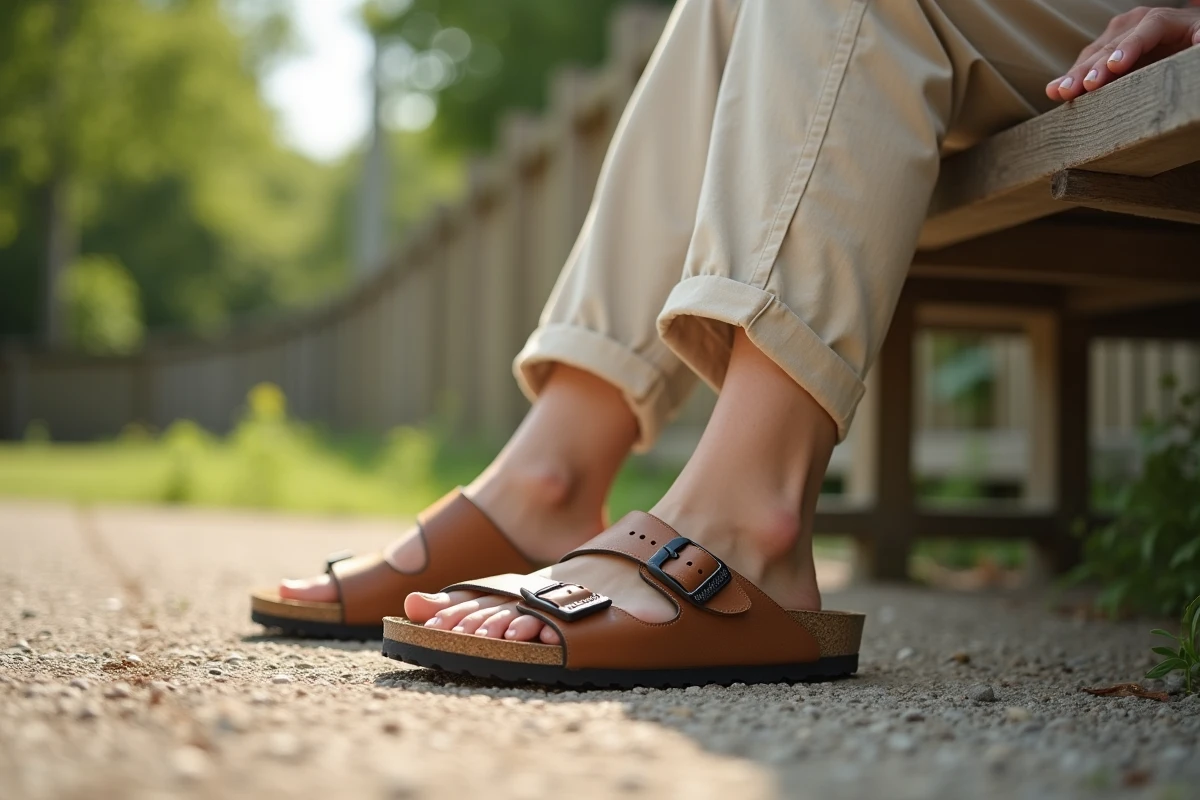
Cork molded on one side, memory foam on the other: the choice between Scholl and Birkenstock is based on precise technical differences, not just aesthetic preference. These two comfort sandal brands share a promise of foot wellness, but their materials, structure, and positioning diverge on almost all measurable criteria.
Cork sole vs. memory foam: what changes underfoot
The sole technology is the first concrete differentiating factor. Birkenstock uses an inner sole made of natural cork and latex, molded to fit the foot’s imprint after a few days of breaking in. The cork comes from Portugal, with enhanced traceability according to the brand’s 2023 Responsibility Report.
Scholl favors memory foam soles in the majority of its recent models, sometimes combined with wood (Pescura range). Comfort is felt from the first wear, with no adaptation period. However, the foam compresses faster than cork over time.
To better understand the differences between Scholl and Birkenstock, a comparative table allows for visualization of the gaps on the criteria that matter in daily life.
| Criterion | Scholl | Birkenstock |
|---|---|---|
| Sole Material | Memory foam, wood (Pescura) | Natural cork and latex |
| Breaking In | Immediate comfort | Few days of adaptation |
| Arch Support | Moderate, flexibility prioritized | Pronounced, rigid anatomical support |
| Sole Durability | Faster compression | Superior longevity of cork |
| Vegan Offer | Limited | Structured range since 2023 |
| Historical Origin | Chicago, early 20th century | Germany, 1774 |
Anatomical foot support: Birkenstock imposes a framework, Scholl allows freedom
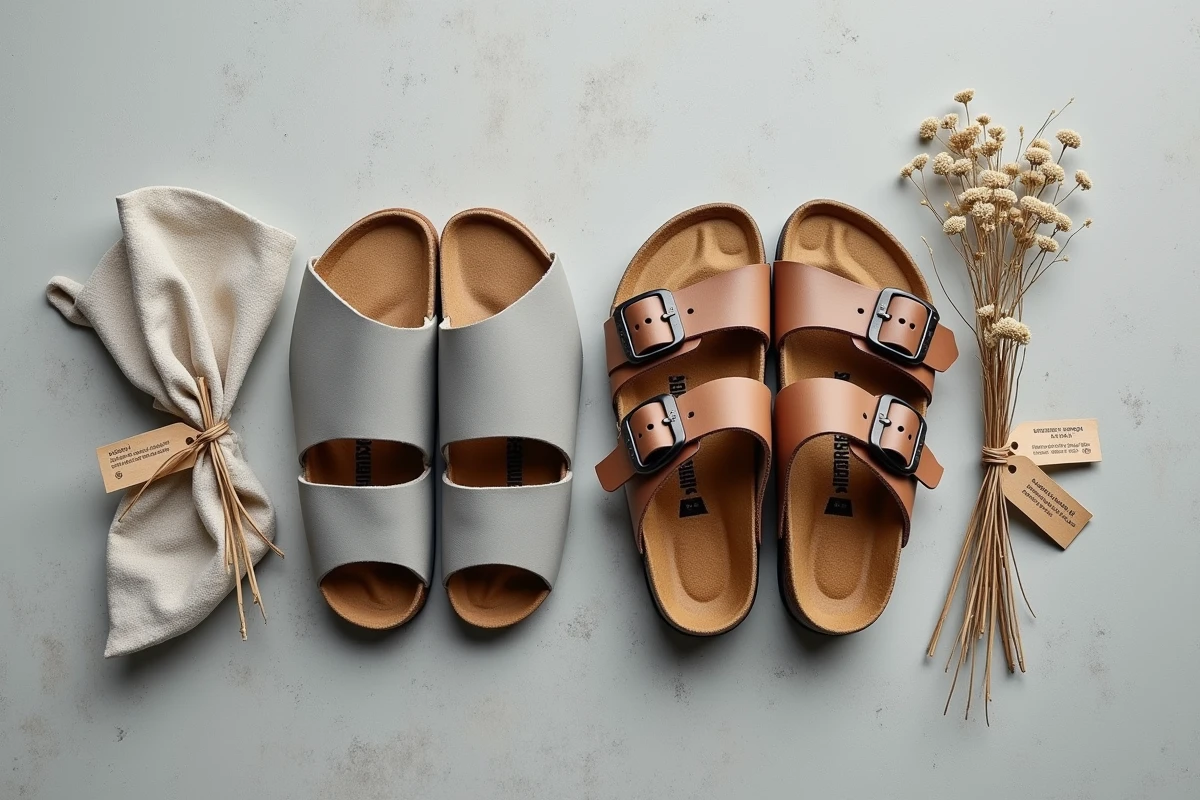
Support is the point where the two philosophies most clearly oppose each other. Birkenstock structures its models (Arizona, Boston, Gizeh) around a rigid shell that supports the arch of the foot, the heel, and the metatarsals. This rigidity divides opinions: people used to soft shoes find the contact hard in the first few days.
Scholl takes a more flexible approach. The brand, founded by an American podiatrist, has historically targeted professionals who stand all day. Its sandals absorb shocks rather than correct posture. The foot moves more within the shoe, which suits those looking for soft comfort without the constraint of support.
This distinction has practical consequences:
- For prolonged use on hard surfaces (hospital, professional kitchen), Scholl’s flexibility reduces immediate fatigue but does not offer active postural support
- For outdoor walking or varied daily use, Birkenstock cork gradually deforms and creates a personalized imprint that improves support over the weeks
- In the case of diagnosed foot pathology (plantar fasciitis, flat feet), the choice depends on the recommendation of a healthcare professional, not on brand marketing
Materials and ethical commitment: Birkenstock’s vegan shift
Leather remains a central material for both brands, but their recent trajectories diverge. Birkenstock has formalized a structured vegan offer since 2023, with glues free of animal components and leather-free models integrated into the main collection (not relegated to a confidential sub-range). The 2023 Responsibility Report also mentions the reduction of virgin plastic components in the soles, replaced by blends made from renewable and recycled materials.
Scholl, after its acquisition by the Aurelius fund in 2021, has begun a premiumization process with collaborations (Céline, Richard Quinn). This strategy repositions certain lines towards a higher fashion-comfort segment, but the commitment to alternative materials to leather remains less visible than at Birkenstock.
Scholl or Birkenstock sandals: which model for which use
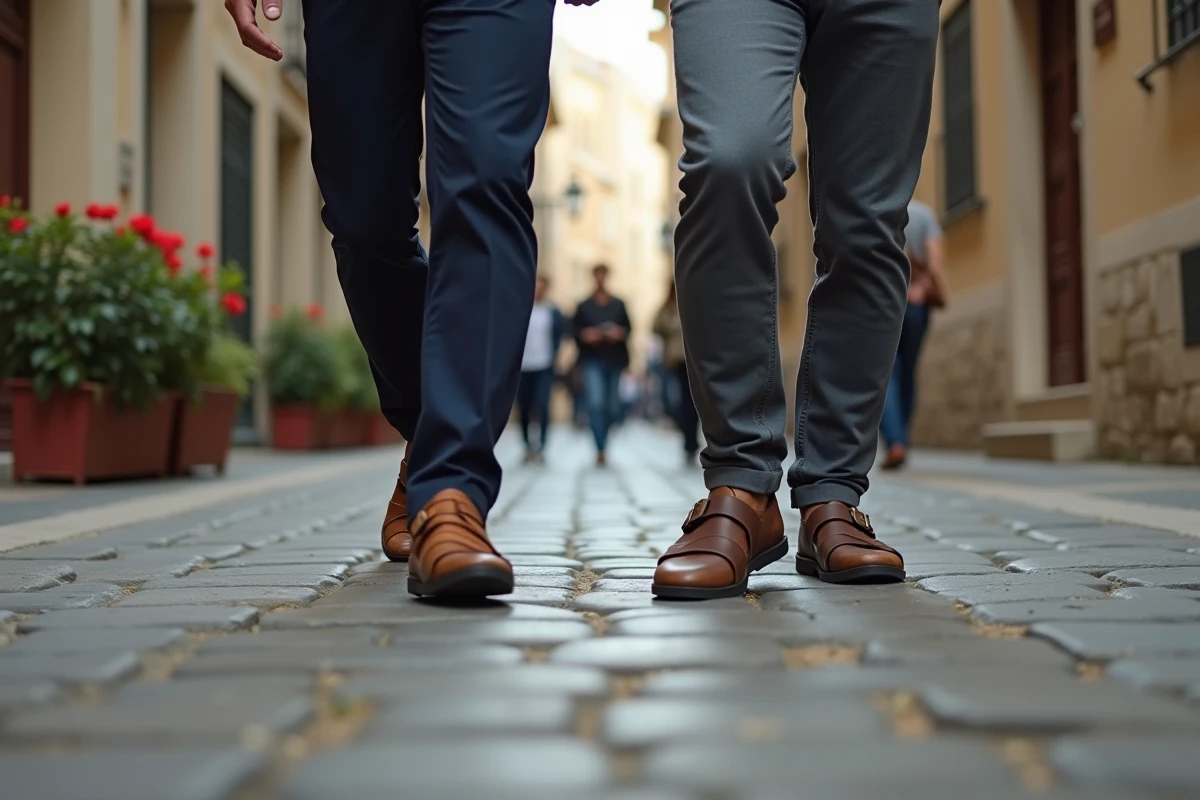
The Arizona model from Birkenstock dominates the brand’s sales and often serves as a reference in comparisons. Its construction with two wide straps and its cork sole make it a versatile model, worn both in the city and on vacation. The Gizeh (thong) and Boston (closed clog) complete the range with distinct uses.
At Scholl, the Pescura (wood and leather sole) remains the iconic model. Its finer design makes it easier to pair with dressed outfits. The range also extends to mules and closed shoes, giving Scholl a wider catalog in terms of silhouettes.
- For mixed daily use (walking, office, outings), Birkenstock Arizona or Gizeh offer durable support thanks to cork
- For a standing professional setting or a more discreet style, the Scholl Pescura provides immediate comfort and a slimmer silhouette
- For a buyer sensitive to ethical criteria, the vegan range from Birkenstock offers a structured and traceable alternative
Counterfeits on marketplaces: a real risk for comfort
Birkenstock stopped selling directly on Amazon in 2017 due to the proliferation of counterfeits. This withdrawal means that Birkenstock sandals found on certain marketplaces do not guarantee either original cork or anatomical molding that justifies the price. Buying through the official site or an authorized retailer remains the only way to ensure the actual quality of the sole.
Scholl is less affected by this phenomenon, as its distribution remains more regulated in pharmacies and specialized supermarkets. The risk of receiving a counterfeit with inferior quality foam sole exists, but it is statistically lower.
The choice between these two brands comes down to a trade-off between immediate flexibility and gradual anatomical support. The Birkenstock cork sole gains comfort over time, while Scholl’s foam offers well-being from the first use but wears out faster. The material underfoot dictates the experience far more than the visible design.