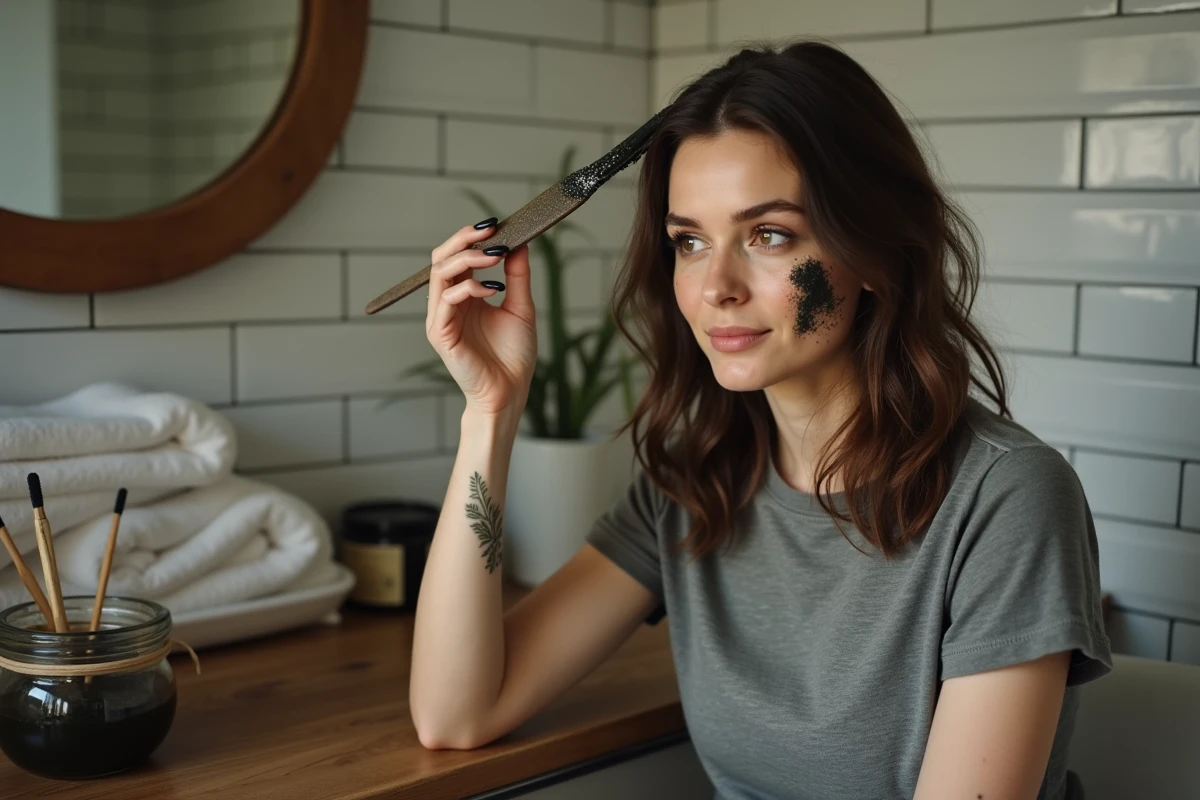
On a chestnut or brown base, the so-called “black” henna does not work like a classic dye that you apply and that gives you the result displayed on the packaging immediately. The plant pigment overlays your natural color, and the result depends as much on the chosen recipe as on the application protocol. Understanding this layering logic avoids many disappointments.
Black henna on chestnut to brown hair: why the result varies so much
Imagine placing a colored filter over a photo. If the starting photo is light, the filter dominates. If it is already dark, the filter mainly alters the shades. Henna works exactly like this: the final color always depends on the starting base.
Pure henna (Lawsonia inermis) produces only one pigment: lawsone, which is orange-copper. On medium chestnut, it gives warm mahogany highlights. On dark brown, these highlights are barely visible indoors but light up in the sun.
To achieve a deep black without reddish highlights, henna must be combined with another dye plant: indigo (Indigofera tinctoria). This mixture, or this sequence of applications, is commonly referred to as “black henna.” Before dyeing hair with black henna, it is essential to know that the proportion of indigo and the application method radically change the result.
One-step or two-step application: the choice that changes everything
Have you noticed that some guides recommend mixing henna and indigo in the same bowl, while others suggest doing two separate applications? These are not two cosmetic variants; they are two protocols with very different results on a chestnut to brown base.
Single henna-indigo mix
A paste containing both powders is prepared and applied in a single session. The result is quicker, but greenish highlights are more common with the one-step method. Indigo, if it hasn’t had time to oxidize properly after application, can turn green for one to two days before darkening.
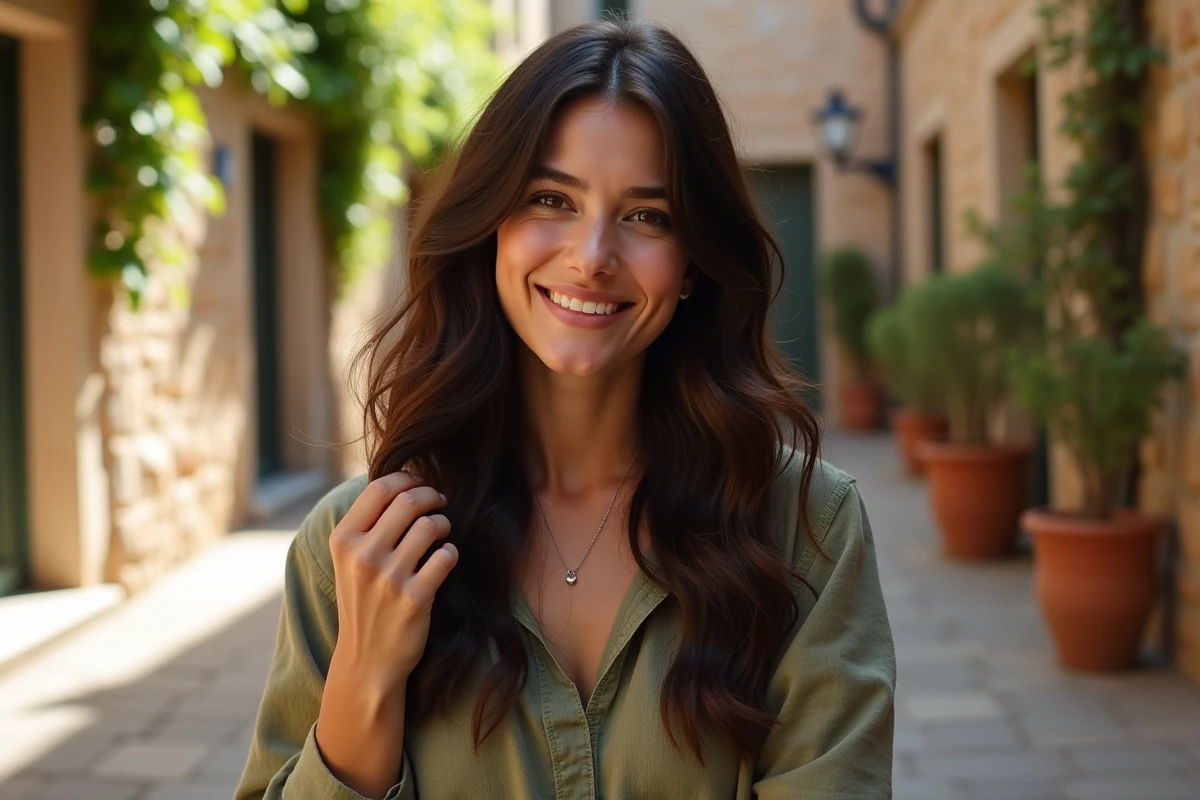
On a light chestnut base, this process often results in a warm brown with residual coppery shades. On a brown base, the result approaches black, but rarely a cool black.
Two-step process
The trend in specialized communities leans towards a two-step process for a stable and cool black. The first step involves applying pure henna to the entire hair. Rinse, dry, then apply a pure indigo bath in a second step.
Why does this separation work better? The lawsone from the henna creates an orange underlayer that serves as a base for the indigo to adhere to. Without this underlayer, the indigo alone slides over brown hair and lasts less long. With it, the blue of the indigo combines with the orange of the henna to produce a denser, more homogeneous black, with much better coverage of any white hairs.
- Pure henna in the first application: leave on for one to three hours depending on the desired coppery intensity in the underlayer
- Complete rinse and drying (or application on still damp hair depending on texture)
- Pure indigo in the second application: prepare the paste just before application as indigo loses its dyeing power quickly once hydrated
- Indigo application time: generally one to two hours, longer for a more intense black
Black henna and PPD: the trap of misleading labeling
The term “black henna” is also used to refer to products that contain nothing plant-based. Many preparations sold under this name contain para-phenylenediamine (PPD), a highly allergenic chemical molecule.
PPD is regulated by Regulation (EC) No. 1223/2009 on cosmetic products. Its use is very restricted in hair dyes, and it is banned in temporary black henna tattoos. The problem is that these restrictions do not always cover products imported outside controlled channels.
Before buying “black henna,” check the INCI list on the packaging. Pure plant henna contains only Lawsonia inermis and possibly Indigofera tinctoria. Any mention of PPD, p-phenylenediamine, aminophenol, or resorcinol indicates a disguised chemical dye.
Maintenance and durability of black henna on a brown base
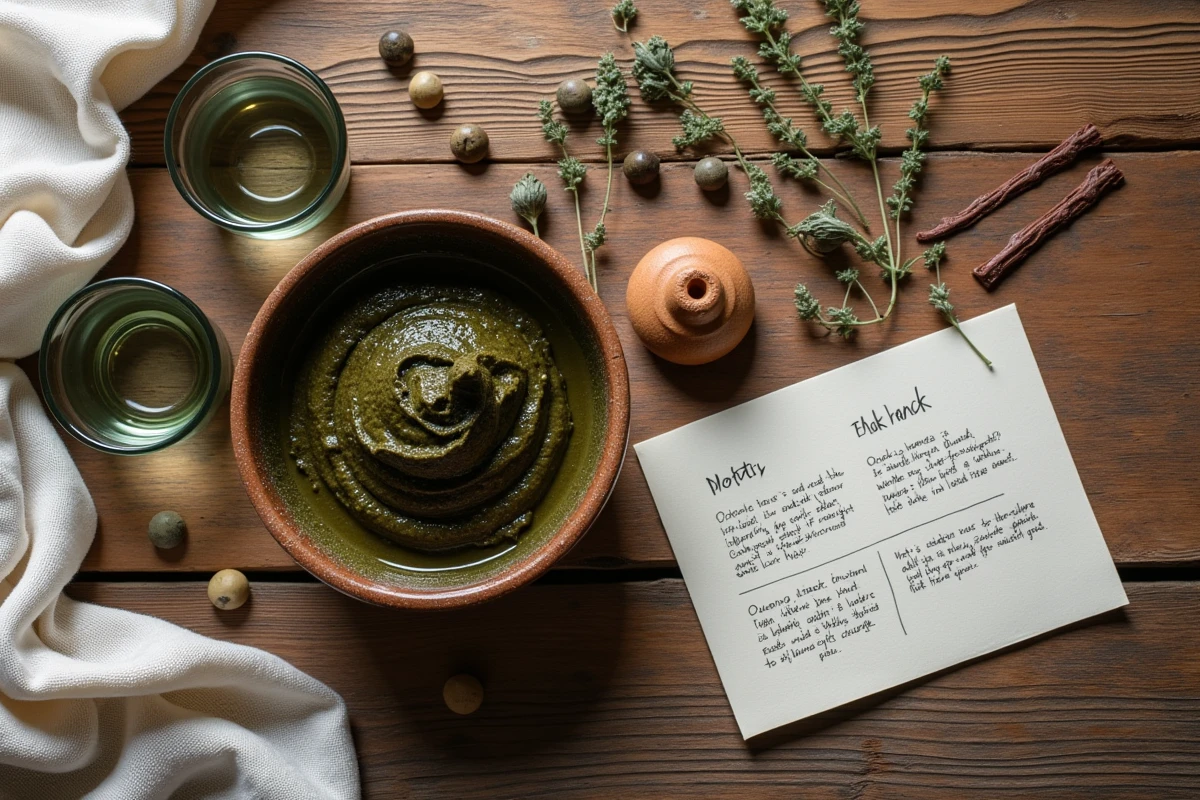
Henna does not penetrate the hair cortex like a chemical dye. It adheres around the cuticle, which explains its coating effect. On a brown base, this coating gradually darkens with successive applications.
The first shampoos after application will wash out some of the pigment. The color generally stabilizes after two to three days. It is at this point that you see the final result.
- Space out shampoos in the first few days to allow the indigo to oxidize completely
- Avoid sulfate shampoos, which wash out the pigment faster
- Apply a fatty substance (coconut oil, olive oil) before shampooing to protect the color
- Renew the application every four to six weeks, targeting the roots first
White hairs cover better with the two-step process, but they absorb more pigment than naturally colored hair. On salt-and-pepper hair with a brown base, expect a slight contrast between the white strands (which turn bluish-black) and the brown strands (which remain very dark brown). This contrast diminishes after two or three applications.
Plant henna combined with indigo does not lighten, unlike chemical dyes that fade to blonde. If you wish to return to a lighter shade later, chemical bleaching will be very difficult and risky. This is a factor to consider from the start: henna is a long-term commitment, not a consequence-free trial.